
Storm Damage Roof Repair
Storm Damage Roof Repair in South Bend, IN
Storm damage roof repair in South Bend, IN, starts with dated facts, not urgency: the EF2 tornado in Gulivoire Park on June 23, 2019, the F3 tornado on October 24, 2001, and a 115 mph design wind speed in the adopted code. This page explains what storms do to roofs, how to document damage, and how to prepare for an adjuster meeting. It does not promise outcomes or rush decisions. For hail specifically, see hail damage; for wind specifically, see wind damage. Call (574) 901-6308 during business hours.
Service overview
Storm Damage in South Bend: Dated Events and Real Effects
South Bend storm history is specific and dated. The June 23, 2019 EF2 tornado in Gulivoire Park brought winds of 115–125 mph over a 2-mile path, with a separate EF0 that day. The October 24, 2001 F3 tornado is the earlier dated event. The adopted code design values for St. Joseph County list a 115 mph wind speed. No tornado frequency figure is published here, since no verified count exists. The after wind damage post covers the first steps from the homeowner side.
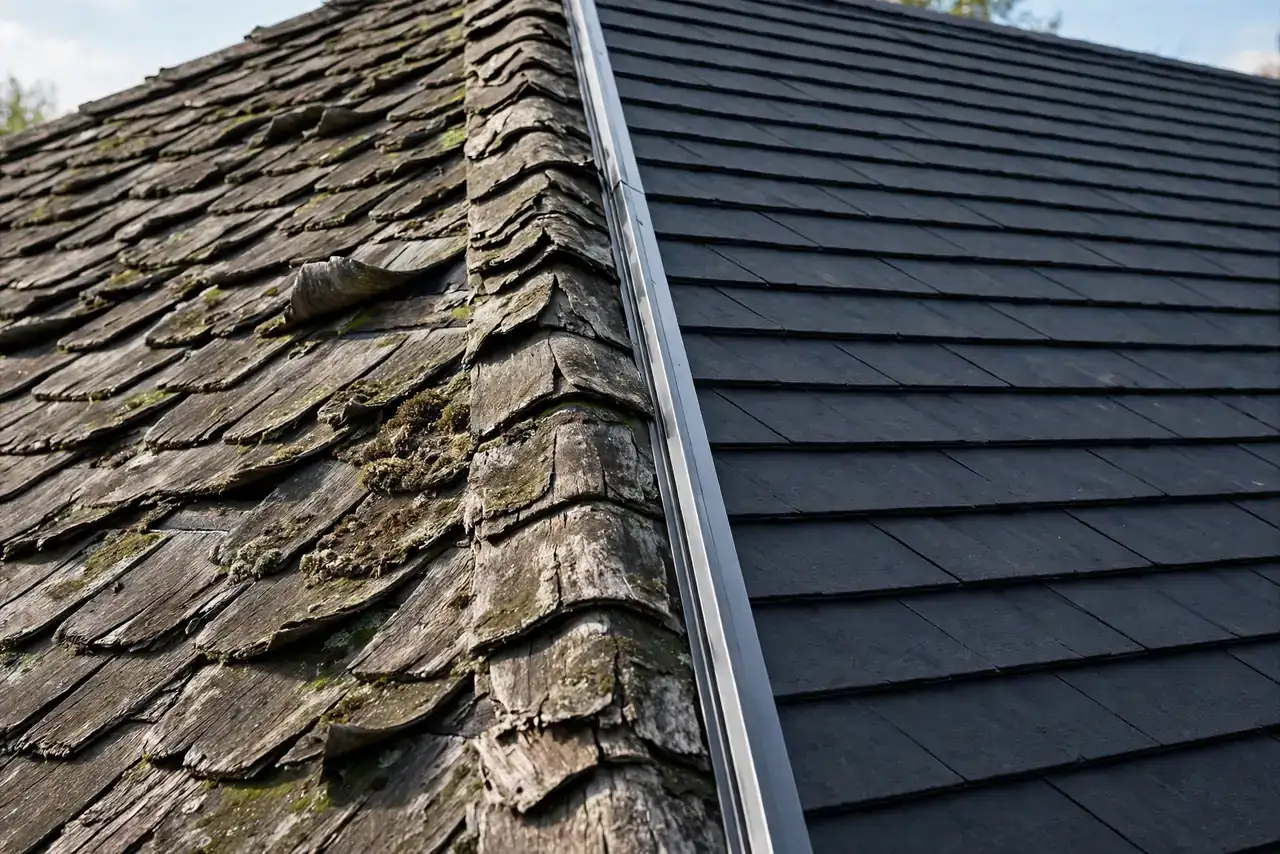
What storms do to roofs is less dramatic than the events themselves: shingles lifted or missing, seals broken, flashing displaced, and water entering through joints that held in calm weather. Hail bruises covering in ways not visible from the ground. The honest response is documentation and assessment, in that order, followed by a written scope. The roof inspection page covers the storm-inspection use case, and the emergency roof repair page covers the safety-first steps when water is actively coming in.
Effects
What Storms Do to Roofs, in Plain Terms
Four effects cover most storm damage. Each is checked on the surface and in the attic together.
Wind lifts and removes covering
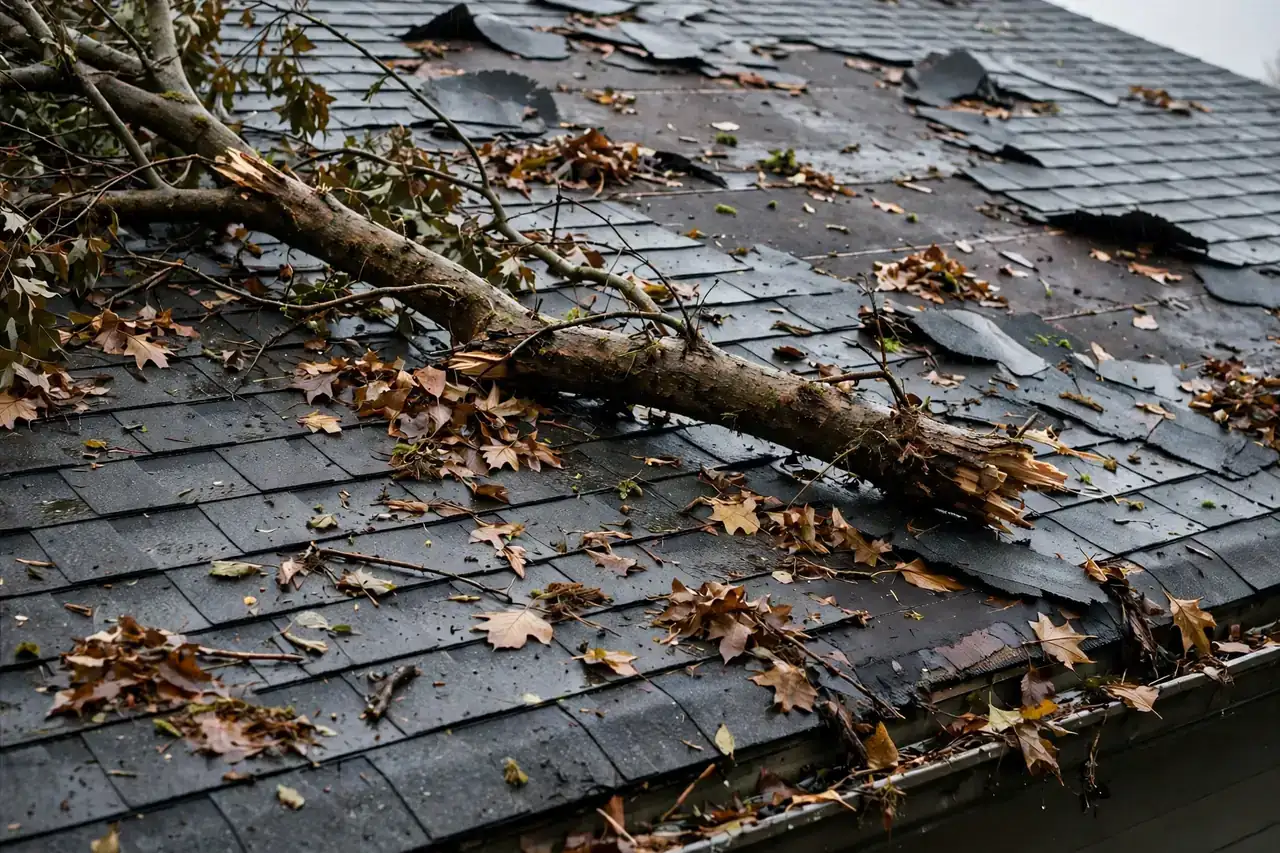
Wind gets under shingle edges, breaks seals, and removes pieces, starting at edges, ridges, and the windward slope. Damage spreads as neighboring seals fail, so the field is checked beyond the visibly missing pieces.
Hail bruises covering
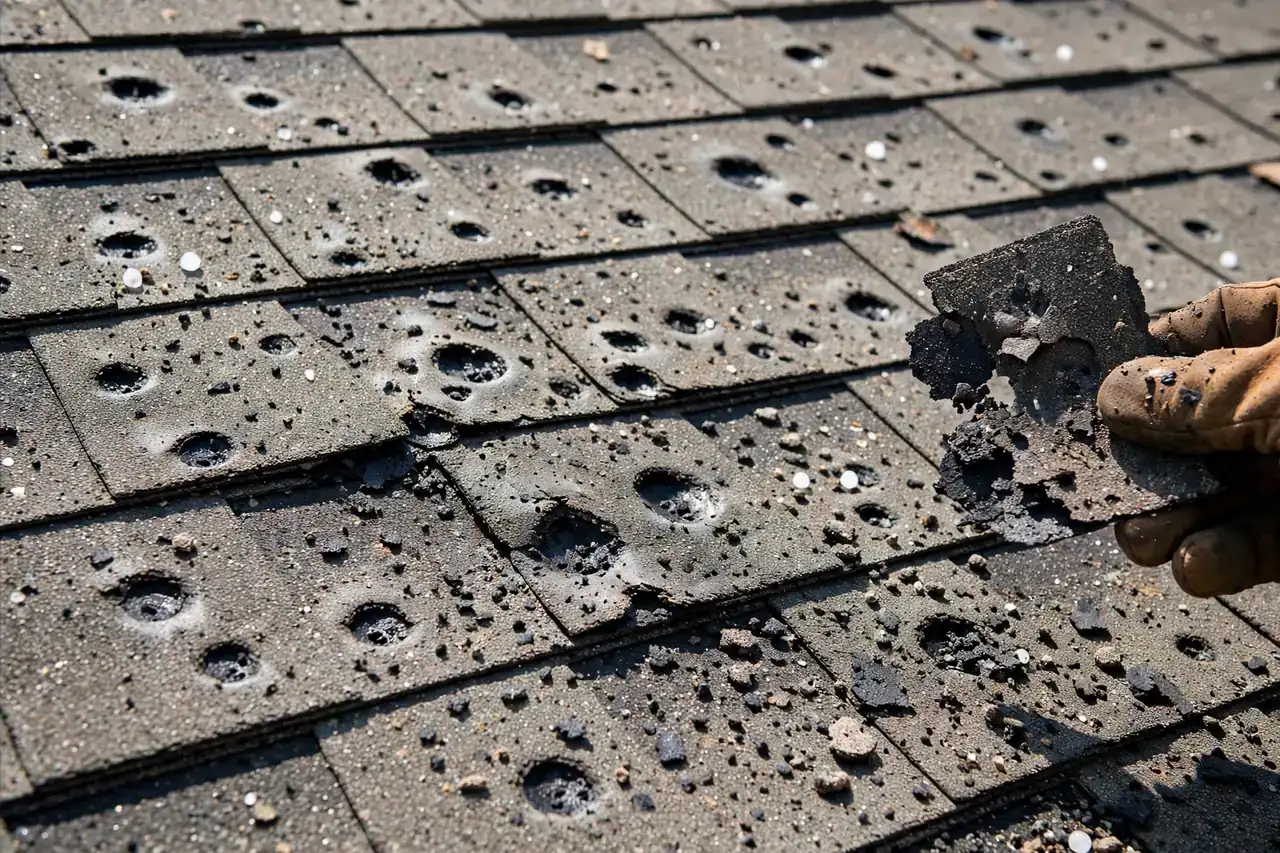
Hail bruises shingles and displaces granules, often without any visible hole from the ground. Dents on vents, gutters, and flashing are clues. The dated events are reported on the hail damage page.
Water enters through opened joints
Once seals or flashing are displaced, the next rain enters through joints that previously held. Leaks appearing days after a storm often trace to storm-opened joints rather than to new damage.
Documentation comes first
Photographs, dates, and a written scope are the foundation of everything that follows, including any insurance conversation. The checklists below set out what to record and how to prepare for an adjuster meeting.
How the work proceeds
How Storm Damage Repair Proceeds, Step by Step
The sequence is deliberately unhurried: safety, documentation, assessment, scope, and then the work. Rushed decisions serve no one.
STEP 01
Safety and the first call
Stay off the roof. Contain water inside, protect belongings, and photograph the damage from the ground. Call during listed hours and describe what happened and when.
Documentation and insurance education
Documenting Damage and Preparing for an Adjuster Meeting
Photograph from the ground first
Before anyone climbs up, photograph the roof from the yard, the debris, and any visible gaps. Ground-level photographs establish the scene and are safe to take in any weather that allows standing outside.
Photograph the interior effects
Ceiling stains, wall marks, attic dampness, and any water entry are photographed with dates. Interior effects show the path and timing of the water, which matters to any later conversation.
Note dates, times, and weather
The storm date, the time damage was noticed, and the weather since all belong in the record. Dated notes turn a story into evidence, and they cost nothing to keep.
Keep damaged material
Shingles, flashing pieces, and debris found in the yard are kept until photographed and recorded. Discarding evidence before it is documented weakens every conversation that follows.
Prepare for the adjuster meeting
Have the photographs, dates, and written scope ready, along with a written list of questions. Take notes during the meeting, including names and what was agreed. Preparation, not pressure, is the point.
Be present where possible
Being present for an inspection or adjuster visit, or having the documentation ready for whoever attends, keeps the record straight. Questions asked in the moment are easier to answer than questions asked weeks later.
Your deductible is your responsibility
Your deductible is your responsibility under your policy. This page states that plainly and offers no arrangement around it. Any conversation about cost starts from the policy terms and the written scope.
What this page does not do
This page offers documentation checklists and adjuster-meeting preparation only. It promises no outcomes. The policyholder handles the claim itself. Those limits are deliberate.
Take time before deciding
Storm damage invites rushed decisions, and rushed decisions are how scope, permits, and district steps get skipped. A written scope, checked permits, and a confirmed COA sequence where one applies are worth the time they take.
Historic-district storm repairs
Where local designation applies, the COA comes before the building permit, even after a storm. In-kind asphalt re-roofing is administratively approvable under the district standards. Checking the address first avoids rework later.

Where storm repair fits
Storm Situations South Bend Homeowners Describe
Shingles missing after wind
A wind event leaves gaps in the field and shingles in the yard. The gaps are documented and photographed, the surrounding seals checked, and the scope written from the findings.
Hail marks found on inspection
No leak, but an inspection finds bruising and granule loss after a dated hail event. The record is made, the extent weighed, and the repair-or-replacement conversation held on findings, not on fear.
A leak appearing days after the storm
Water shows days later, through a joint the storm opened. The source is traced through the attic and the surface, and the repair addresses the joint. The leak detection page explains the tracing.
A district address after a storm
Damage to a home inside a local historic district still follows the COA-before-permit sequence. The documentation is the same; the approval order is what differs, and it is confirmed at the start.
South Bend context
Storm Damage Against South Bend Housing and Weather
South Bend's housing layers face storms differently: older core houses with layered coverings and old flashing, revival suburbs with dormer and valley joints, and postwar ranches with long low slopes. The dated events, the 2019 EF2 and the 2001 F3, plus the 115 mph design wind speed, frame the wind side, while secondary-sourced hail events frame the hail side. Neighborhood notes below link to the Howard Park–East Bank, River Park, and North Shore Triangle pages.
Howard Park–East Bank
Downtown-adjacent riverfront stock combining older Victorians and Foursquares, 2019 townhomes, and industrial adaptive reuse. The Howard Park Historic District is National Register listed; local review status is not evidenced. Read the Howard Park–East Bank roofing notes.
River Park
East-side stock developed primarily 1920–1960, with a substantial renter and investor presence. Documentation matters for owners and occupants alike after a storm. Read the River Park roofing notes.
Near Northwest
An umbrella neighborhood with a Victorian, Foursquare, and bungalow core plus post-2019 infill, where boundaries vary by source and district membership is address-specific. Read the Near Northwest roofing notes.
Keller Park
Small-lot stock of Cape Cods, bungalows, and ranches on the northwest side. Small houses mean storm damage reaches living space quickly, which makes documentation urgent. Read the Keller Park roofing notes.
North Shore Triangle
River-curve vintage stock with documented 2016 and 2018 flood and sewage-backup history. After storms, drainage, grade, and downspout pathways deserve attention alongside the roof covering. Read the North Shore Triangle roofing notes.
The June 23, 2019 EF2 tornado
The EF2 tornado in Gulivoire Park, with winds of 115–125 mph over a 2-mile path, is the dated local wind event, with a separate EF0 that day. No tornado frequency figure is published.
The October 24, 2001 F3 tornado
The F3 tornado of October 24, 2001, is the earlier dated event in the local record. Path-length figures conflict within the sources and are not stated here.
Dated hail events
Secondary sources report hail up to 2.5 inches on July 20, 2023, and 2.75-inch hail on June 15, 2008. Events are reported, never a merged count; the hail damage page carries the detail.
Design wind speed
The adopted code design values for St. Joseph County list a 115 mph wind speed, alongside a 30 psf ground snow load and ice shield required. These are the code anchors for the storm discussion.
Problems we solve
Storm Problems Assessed and Repaired in South Bend
Each problem below starts with documentation. The scope follows the findings.
Shingles missing after wind
Gaps are photographed from the ground, the surrounding seals checked, and the scope written from the findings. The wind damage page covers the wind detail.
Hail bruising unseen from the ground
Bruising and granule loss are found on the surface, with dents on vents and gutters as clues. The record is made before any scope is discussed.
A leak after the storm
Water entering through a storm-opened joint is traced through the attic and the surface, and the joint addressed. Timing notes help: when the leak appeared, and what the weather was doing.
Flashing lifted by wind
Displaced flashing at chimneys, walls, and ridges is documented and addressed at the joint. The chimney flashing page covers the most involved detail.

A practical standard for every visit.
Clear planningPrepared arrivalsCareful workLocal follow-through
What to expect
What a Storm Damage Conversation Covers
A storm damage conversation covers safety, documentation, assessment, and scope, in that order, without rushing any of them. Quality Roofing LLC is a South Bend roofing contractor at 63251 Mulberry Rd, reachable by phone at (574) 901-6308 during listed hours. The hail signs post and the after wind damage post cover the homeowner side of the same events.
- Safety steps first: staying off the roof, containing water, documenting from the ground
- Documentation checklists: photographs, dates, weather notes, and kept material
- Adjuster-meeting preparation: records ready, questions written, notes taken
- Phone contact during listed hours: Mon–Fri 7 AM–7 PM, Sat 8 AM–8 PM, Sun Closed
- A 5.0-star rating from 23 Google reviews, with excerpts and a link to the Google profile below
Neighborhood pages
Neighborhood Pages for South Bend Roofing Notes
Downtown South BendNear NorthwestRiver ParkHoward ParkSunnymedeKeller ParkEdison ParkLincoln ParkLaSalle Park
See all neighborhood pages Notes from local customers
What South Bend Homeowners Say
Quality Roofing did a great job on our roof. They showed up as promised and our roof was completed in 2 days, including tearing off the old shingles, and replacing several sheets of plywood. We are very happy with their work.
Roberto is very good at what he does. Explains everything in detail. Also actually listens to the customer and doesn't try to sell you anything that is not really necessary!
The guys were able to finish the job in one day even though the short rain. They were very respectful not only to me but about my property.
Photographs of the roof from the ground, the debris, and the interior effects, with the storm date, the time damage was noticed, and weather notes. Keep damaged material until it has been photographed. Dated, photographed records are the foundation of any insurance conversation.
Have the photographs, dates, and written scope ready, with a written list of questions. Take notes during the meeting, including names and what was agreed. Being present where possible, or having the documentation ready for whoever attends, keeps the record straight.
Your deductible is your responsibility under your policy. This page states that plainly and offers no arrangement around it. Any conversation about cost starts from the policy terms and the written scope.
Insist on a written scope, checked permit steps, and, where a local historic district applies, the COA-before-permit sequence. Take time to read the scope and the record before agreeing to anything. Documentation first, decisions second.
Keep exploring
Services that pair with storm damage roof repair
Call during business hours
Talk About Storm Damage in South Bend
Call Quality Roofing LLC at (574) 901-6308 during listed hours: Mon–Fri 7 AM–7 PM, Sat 8 AM–8 PM, Sun Closed. Describe the storm date, the damage noticed, and what has been documented so far.
Start with the basics
Contact Quality Roofing LLC
Call Quality Roofing LLC at (574) 901-6308 during business hours: Mon–Fri 7 AM–7 PM, Sat 8 AM–8 PM, Sun Closed. Phone is the contact channel for this business. The office address is 63251 Mulberry Rd, South Bend, IN 46614.