
Leak Detection and Repair
Roof Leak Detection and Repair in South Bend, IN
Roof leak detection and repair in South Bend, IN, starts from one fact: water rarely stains the ceiling directly below where it entered. Detection is a step in the repair, not a separate service, and it means tracing the water from the stain back to the flashing joint, valley, or penetration where it got in. This page explains the sources and the tracing steps. For the repair itself, see roof repair; for a whole-roof assessment, see roof inspection. Call (574) 901-6308 during business hours.
Service overview
Tracing a Roof Leak From Stain to Source
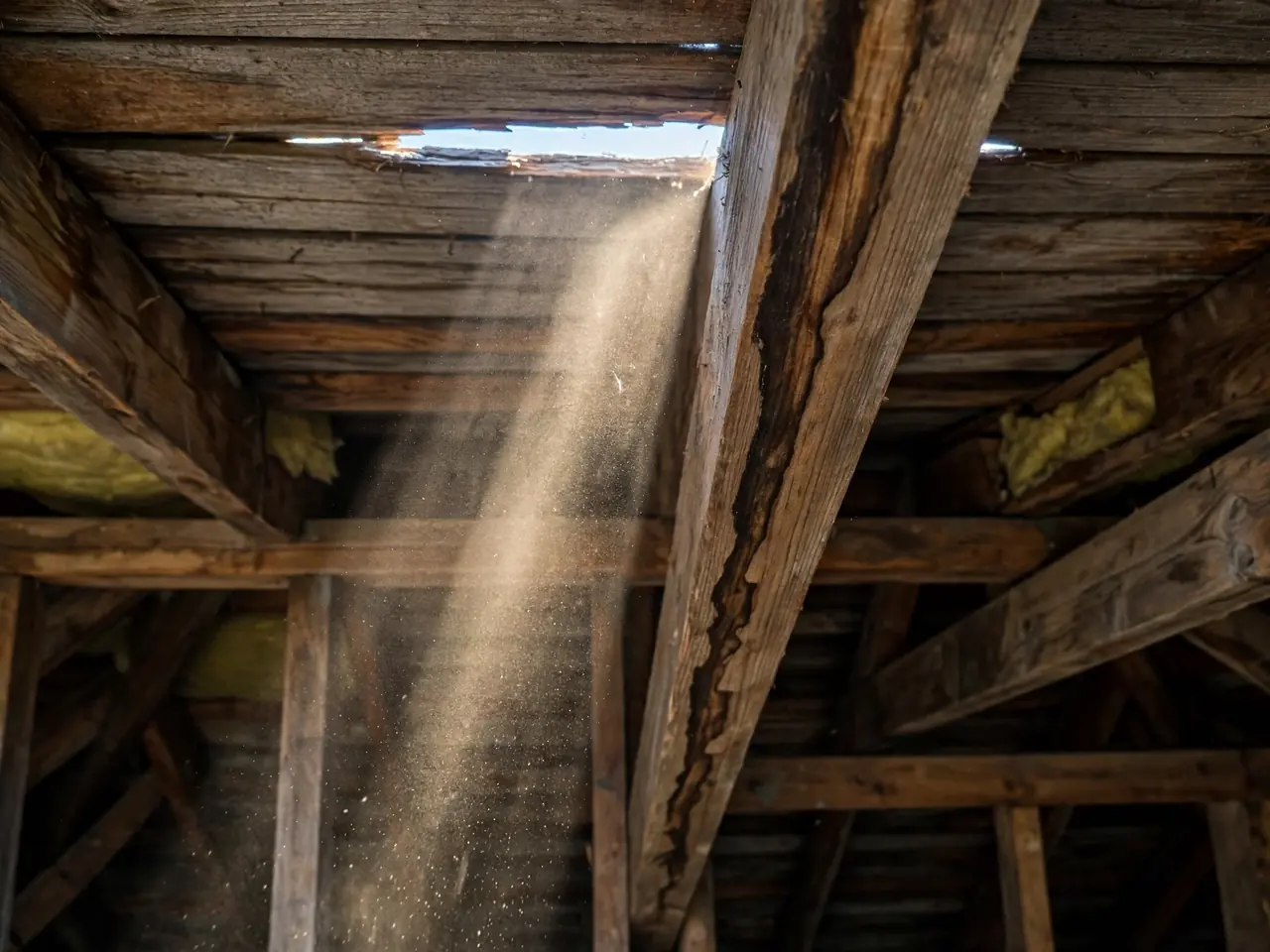
Water entering a roof follows gravity, framing, and the path of least resistance, so the stain on a ceiling or wall can sit well away from the entry point. Tracing means working backward: what shows inside, what the attic reveals, and what the roof surface shows at flashing, valleys, and penetrations. The ceiling drip post covers the same path from the homeowner side, and the chimney leak post covers the most common single source.
Detection is not sold here as a standalone visit with its own separate purpose. It is the first part of a repair: find the source, show the finding, and then write the repair scope around it. When the source cannot be found from the surface alone, the attic check matters most, since daylight, damp framing, and staining patterns narrow the search. When the finding points beyond one joint, the conversation becomes the one on the roof repair or roof replacement page, with the reasons stated.
Why leaks mislead
Why the Stain Is Rarely Above the Leak
Four facts about how water moves through a roof assembly explain most of the confusion around leaks.
Water travels before it stains
Water entering at a flashing joint can run along framing or underlayment before it reaches a ceiling. The stain marks the end of the journey, and the search starts by working backward from it.
Flashing joints are the first suspects
Chimneys, walls, skylights, and dormers interrupt the roof field, and the flashing at those joints moves with the seasons. Most traced leaks end at a joint, not in the middle of the field.
Valleys concentrate water
Valleys gather runoff from two slopes, so wear and failure show there early. A valley leak can appear well away from the valley itself, depending on the framing below.
Penetrations age quietly
Pipe boots, vents, and other penetrations age and crack without any visible change from the ground. They are checked on every leak call, even when the stain sits somewhere else.
How tracing proceeds
How Leak Detection and Repair Proceeds, Step by Step
The steps below are the usual shape of a leak call, from the first description to the record left behind.
STEP 01
Describe the leak
When does water appear, where does it show, and what was the weather doing? Timing matters: a leak that appears only in wind-driven rain points somewhere different from one that appears in every steady rain.
Sources and steps
Leak Sources and Detection Steps, in Detail
Chimney flashing
Step flashing and counter flashing at a chimney must keep water out while the chimney and the roof move differently. Repeated leaks at the same chimney usually mean the flashing detail needs attention. See chimney flashing repair.
Step and counter flashing
Step flashing pieces overlap up the slope at a wall or chimney, with counter flashing covering their top edges. When either layer opens, water gets behind the joint and into the framing, often far from where it shows.
Valley construction
A valley is a system: underlayment, valley material, and the courses woven or cut over it. A leak at a valley is traced through those layers, not only across the visible shingles.
Pipe boots and vents
Rubber boots around vent pipes crack with age and sun, and vent flashing can lift. These are small details with outsized leak potential, and they are checked even when the stain sits elsewhere.
Skylight flashing
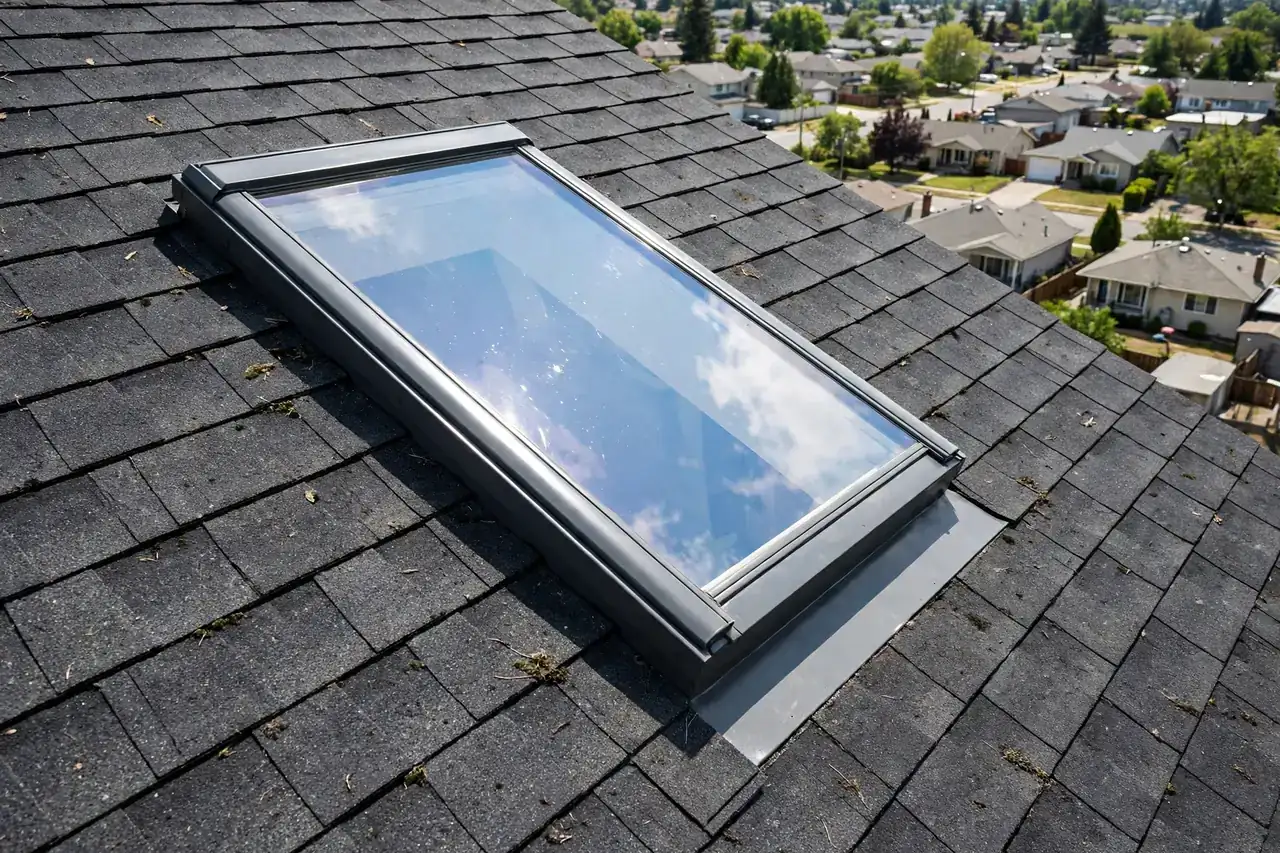
Most skylight leaks are flashing questions, not glass questions. The flashing around the unit and the surrounding courses are checked together; see skylight repair for the detail.
Dormer joints
Dormers concentrate joints: side walls, valleys, and apron flashing in a small area, often on revival-suburb and Cape Cod forms. Each joint is a possible entry point, and the tracing works through them in turn.
Ice-dam backup
In winter, meltwater can back up behind ice at the eaves and enter under the covering. The mechanism is attic warmth melting snow that refreezes at the colder eave; prevention is ventilation, insulation, and air sealing, covered on the roof inspection page.
Attic clues
Damp insulation, stained framing, daylight at unexpected places, and rust on fasteners all narrow a search. The attic is where the path of the water is often visible even when the roof surface looks sound.
Controlled water testing
When the source stays unclear, a controlled water test, applied to one detail at a time from the lowest suspect upward while someone watches inside, can isolate the entry point. It is a methodical step, not a guess, and it is used sparingly.
What detection is not
Detection here is not a separate service with its own visit and report, and no equipment claim is made for it. It is the tracing step of a repair, shown to the homeowner, followed by a scope written around the finding.
Where tracing fits
Leak Situations South Bend Homeowners Describe
A stain after heavy rain
One ceiling stain appears after a storm and grows with each rain. The attic and the roof surface are checked in the area above and uphill of the stain, and the flashing or penetration found there is addressed.
A leak only in wind-driven rain
Water appears only when rain is driven sideways. That timing points to a joint that sheds water in calm rain but admits it under wind pressure, often at a wall, dormer, or ridge detail.
A leak at the chimney
Water shows near the chimney breast or in the attic beside the flue. The step and counter flashing are checked first, along with the deck and framing around the chimney, before any other suspect is considered.
A winter leak at the eaves
Water appears at the eave or the top of an exterior wall during thaw. The mechanism is usually ice-dam backup, and the conversation turns to ventilation, insulation, and air sealing rather than to a surface patch.
South Bend context
Leak Detection Against South Bend Housing and Weather
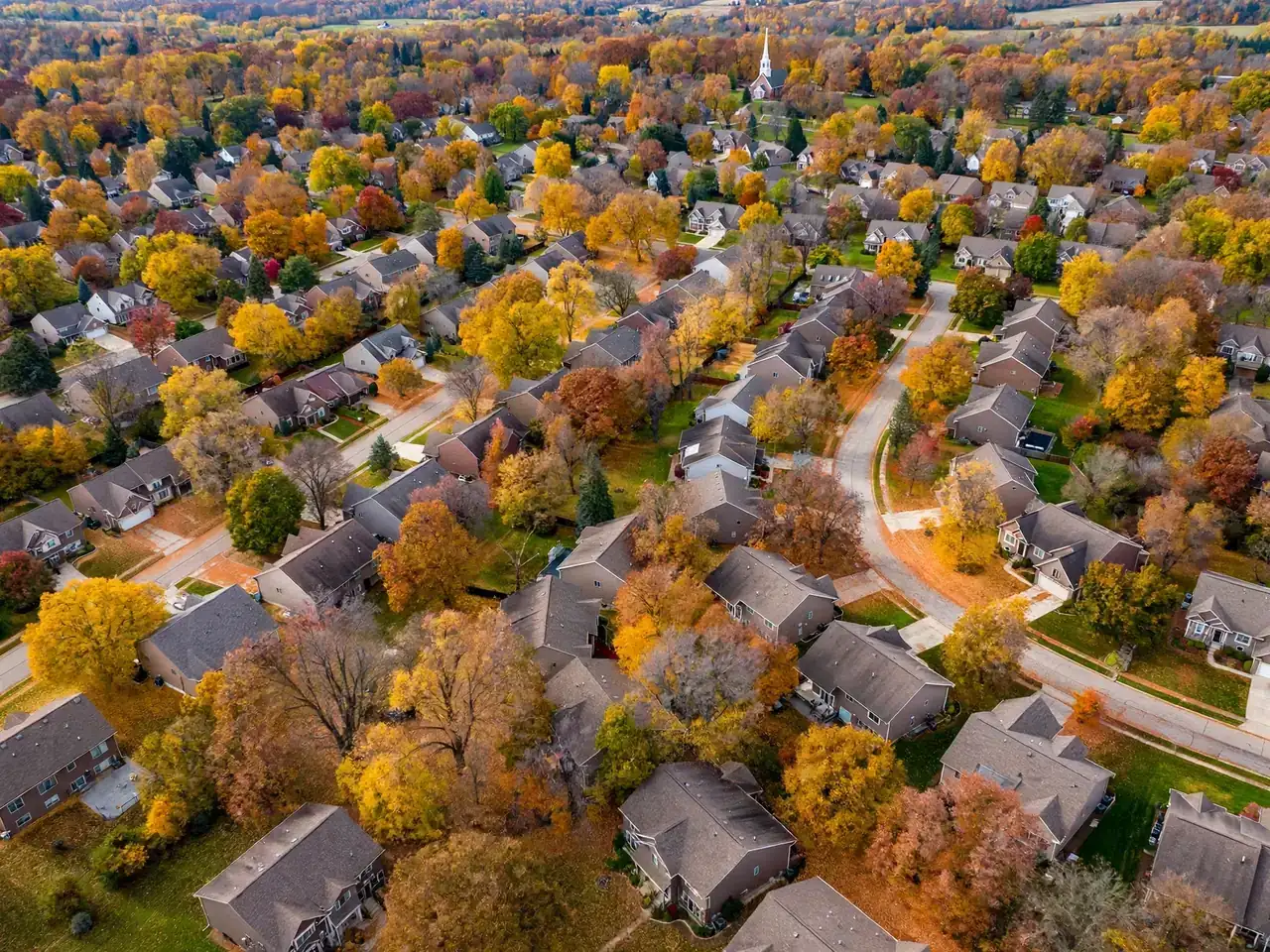
South Bend's pre-1920 core, revival suburbs, and postwar ring each present different leak paths: older flashing details and layered coverings in the core, dormer and valley joints in revival suburbs, and long low slopes on postwar ranches and split-levels. Freeze-thaw cycles open joints, and lake-effect snow, with a 1991–2020 normal of 64.5 inches and a range from 39.0 inches in 2021 to 91.8 inches in 2022, loads the eaves. Neighborhood notes below link to the Near Northwest and Sunnymede pages.
Near Northwest
An umbrella neighborhood with a Victorian, Foursquare, and bungalow core plus post-2019 infill, where boundaries vary by source and district membership is address-specific. Older flashing details are a plausible theme. Read the Near Northwest roofing notes.
Sunnymede
A 1920s subdivision with mixed revival and Foursquare stock, where the East Wayne Street local historic district has an active COA process. Dormer and valley joints are the forms to check. Read the Sunnymede roofing notes.
Wooded Estates
A subdivision split by Twyckenham Drive, with a plat recorded in 1946 and a dating tension in the evidence. Larger tree-shaded lots to the east and smaller early-1900s stock to the west present different leak paths. Read the Wooded Estates roofing notes.
Keller Park
Small-lot stock of Cape Cods, bungalows, and ranches, often built in the 1920s to 1950s. Small houses mean short runs from entry to stain, which can make tracing simpler. Read the Keller Park roofing notes.
Freeze-thaw cycles
Repeated freezing and thawing opens flashing joints and works on sealant. A leak that appears in late winter often traces to a joint that moved through the season.
Lake-effect snow
Heavy snow loads the eaves and feeds the melt-freeze cycle behind ice dams. The attic conditions behind that cycle are covered in the ice-dam prevention section of the roof inspection page.
Older flashing details
Flashing installed decades ago has lived through many seasons of movement. On core houses, the age of the flashing is as relevant as the age of the covering.
Problems we solve
Leak Problems Traced and Repaired in South Bend
Each problem below is a tracing question first and a repair question second.
Water dripping from a ceiling
Contain the water, move belongings, and photograph the drip and the weather. The source is traced through the attic and the surface; the ceiling drip post covers the first steps.
A stain spreading on a wall
A wall stain often means water is running down framing from a joint above. The search works upward from the stain, through the attic, to the flashing or valley involved.
Dampness in the attic
Damp insulation or stained framing in the attic narrows the search even when no ceiling stain has appeared. Attic moisture is also a ventilation question, and both are looked at together.
A leak that returns after repair
A returning leak usually means the joint at the source was covered rather than corrected, or the entry point was misjudged. The tracing starts over, methodically, from the stain.
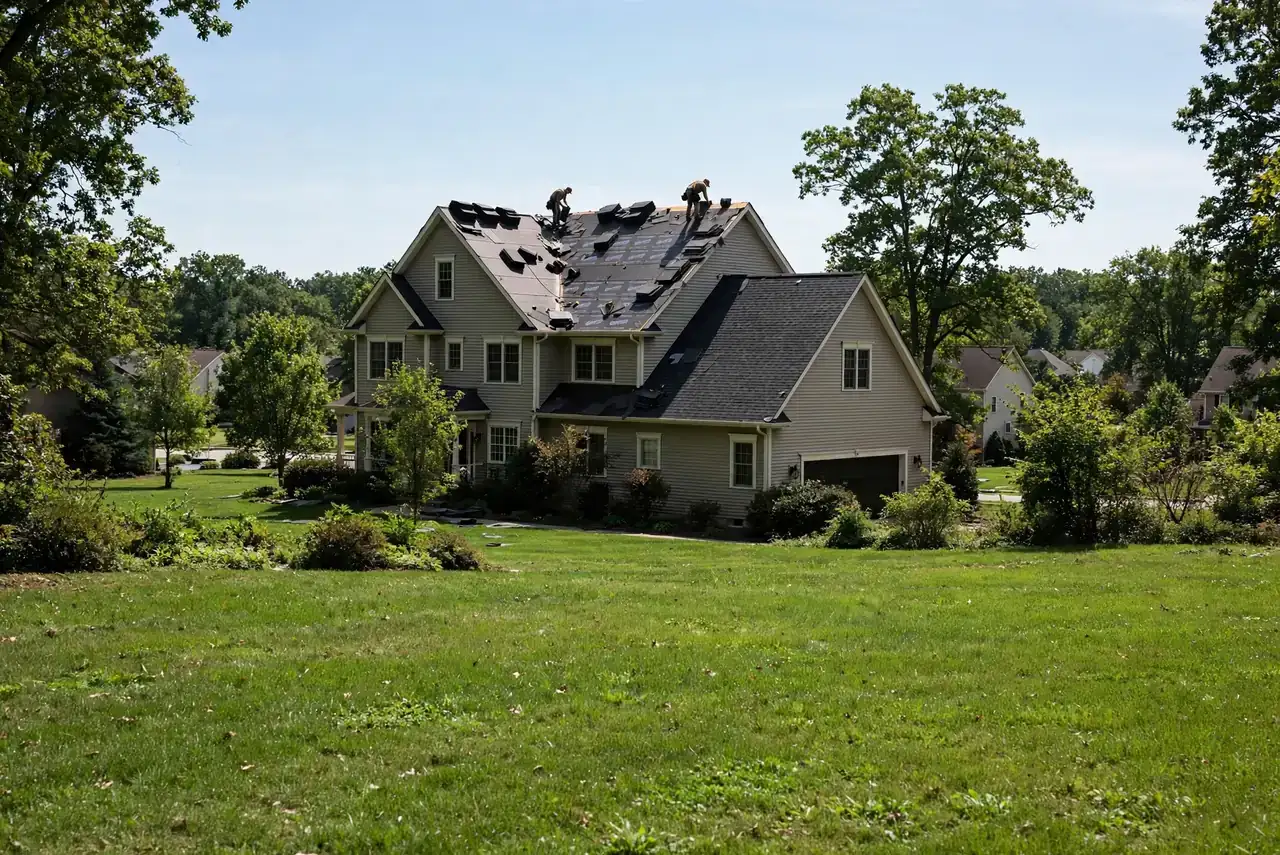
A practical standard for every visit.
Clear planningPrepared arrivalsCareful workLocal follow-through
What to expect
What a Leak Call Covers
A leak call covers the description, the tracing, the finding, and the scope, in that order. Quality Roofing LLC is a South Bend roofing contractor at 63251 Mulberry Rd, reachable by phone at (574) 901-6308 during listed hours. The small-leak post covers interim steps from the homeowner side, and the emergency roof repair page covers what to do first when water is actively coming in.
- A description of when the leak appears and where water shows, taken down first
- Tracing through the attic and the roof surface, with the finding shown to the homeowner
- A written scope for the repair proposed, addressed at the source found
- Phone contact during listed hours: Mon–Fri 7 AM–7 PM, Sat 8 AM–8 PM, Sun Closed
- A 5.0-star rating from 23 Google reviews, with excerpts and a link to the Google profile below
Neighborhood pages
Neighborhood Pages for South Bend Roofing Notes
Downtown South BendNear NorthwestRiver ParkHoward ParkSunnymedeKeller ParkEdison ParkLincoln ParkLaSalle Park
See all neighborhood pages Notes from local customers
What South Bend Homeowners Say
Roberto is very good at what he does. Explains everything in detail. Also actually listens to the customer and doesn't try to sell you anything that is not really necessary!
The guys were able to finish the job in one day even though the short rain. They were very respectful not only to me but about my property.
I could not have asked for a better crew to redo my roof! They were kind, respectful, cleaned up everything when they finished. My roof looks awesome!
Because water entering a roof follows framing and underlayment before it reaches a ceiling. The stain marks where the water arrived, not where it entered. Tracing works backward from the stain, through the attic and the roof surface, to the flashing joint, valley, or penetration involved.
Sometimes the attic narrows the search a great deal, but the roof surface still needs checking at the flashing, valleys, and penetrations in the narrowed area. Both views together are what turn a suspicion into a finding.
Usually because the step and counter flashing at the chimney has been covered rather than corrected, or because the deck and framing around the chimney were not checked. Addressing the flashing detail itself, and checking what lies around it, is what breaks the pattern.
Contain the water with buckets or containers, move belongings away from the drip, and photograph the damage and the dates it appeared. Stay off the roof, especially when it is wet. Call during listed hours: Mon–Fri 7 AM–7 PM, Sat 8 AM–8 PM, Sun Closed.
Keep exploring
Related Services
Call during business hours
Talk About a Roof Leak in South Bend
Call Quality Roofing LLC at (574) 901-6308 during listed hours: Mon–Fri 7 AM–7 PM, Sat 8 AM–8 PM, Sun Closed. Describe when the leak appears and where water shows, and the tracing starts from there.
Start with the basics
Contact Quality Roofing LLC
Call Quality Roofing LLC at (574) 901-6308 during business hours: Mon–Fri 7 AM–7 PM, Sat 8 AM–8 PM, Sun Closed. Phone is the contact channel for this business. The office address is 63251 Mulberry Rd, South Bend, IN 46614.