
What to do after wind damage knocks shingles off your roof
Wind damage knocks shingles off South Bend roofs most often in summer storms. Safety comes first, then documentation, then temporary protection, in that order.
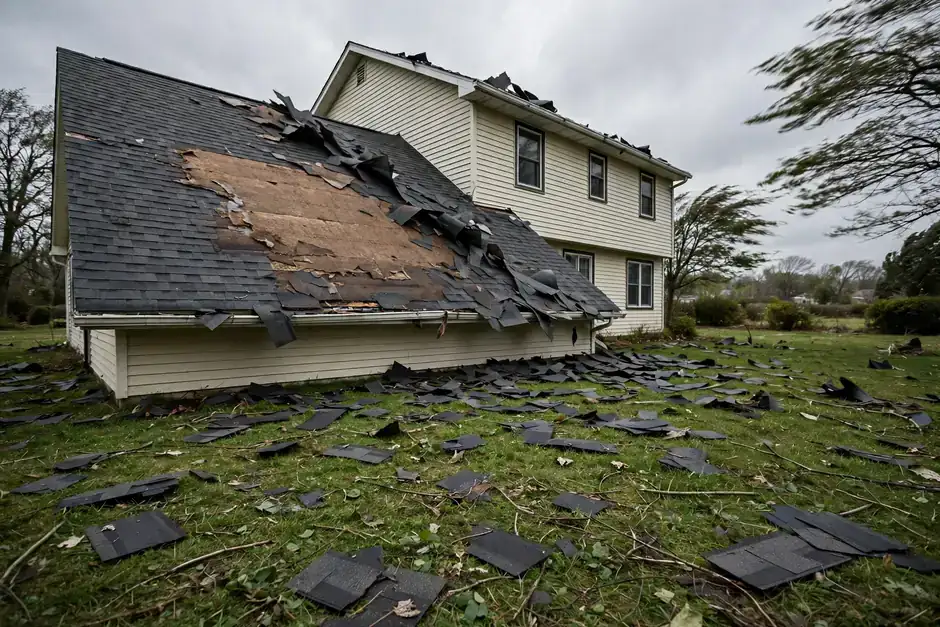
What to do after wind damage knocks shingles off your roof starts with safety, not with the roof. Downed power lines, unstable trees and limbs, and wet, damaged surfaces make the area around a storm-damaged house hazardous. This guide sets out the order: safety, documentation, temporary protection, and then repair decisions.
Wind is a real local exposure. The adopted code sets a 115 mph design wind speed for St. Joseph County. Dated tornadoes provide the context: an EF2 in Gulivoire Park on 23 June 2019, with winds of 115 to 125 mph over a 2-mile path, and an F3 on 24 October 2001. Most shingle loss, though, comes from straight-line wind in summer storms, which lifts tabs and breaks seals without removing whole sections.
First, make sure it's safe to look
Before looking at the roof, check the surroundings. Downed lines, leaning trees, loose limbs, and damaged gutters or siding can all make the area unsafe. If power lines are down or damaged, stay clear and contact the utility. Do not touch lines or anything in contact with them.
Do not climb onto a wet, damaged, or wind-affected roof. Fall risk is high after a storm, and walking a damaged roof can break seals and dislodge more shingles. A ground look, binoculars, and photographs cover the first pass. Roof work after a storm belongs to a contractor with fall protection.
- Check for downed lines, leaning trees, and loose limbs before approaching the house.
- Stay inside if the storm is still passing or wind is still strong.
- Look from the ground first. Note missing, creased, or displaced shingles and debris patterns.
- Check the attic from inside for new staining, daylight through the deck, or active dripping.
- Keep children and pets away from debris and damaged areas until the surroundings are checked.
If water is coming inside, the immediate steps are interior ones: move belongings, place containers under drips, and avoid areas where a ceiling looks swollen or sagging. See why water drips from a ceiling after rain for the interior side.
Document the damage before anything else
Documentation comes before repair decisions, because the record supports every later step: the inspection, the scope, and any conversation with an insurer. Photographs taken close to the storm, with the date noted, are more useful than photographs taken later.
Photograph from the ground: missing or displaced shingles, creased tabs, damaged ridge caps, dented or displaced flashing and gutters, debris on the ground, and any interior staining. Note the date and approximate time of the storm, and keep the photographs with any later inspection findings.
Keep displaced shingles and debris where it is practical to do so, and note where pieces were found. A contractor and an insurer both read the pattern of damage, and the pattern is clearer when the evidence has not been cleared away.
- Note the date and approximate time of the storm.
- Photograph the roof from the ground, from more than one angle, including ridge caps and flashing.
- Photograph interior signs: stains, bubbling paint, and attic moisture.
- Keep the photographs and notes with the inspection record when it is produced.
A roof inspection after wind covers shingles, seals, ridge caps, flashing, and the attic, and produces the written record. Documentation is the framing for any insurance conversation: photographs, findings, and a written scope, with no outcome promised. See storm damage roof repair for the repair side.
Tarp the roof fast to stop water intrusion
Exposed decking lets water in with the next rain, so temporary protection matters. Covering the exposed area promptly limits water entry while inspection and repair are arranged. Temporary protection is a holding measure, not a repair.
Covering a roof after a storm is roof work, with fall risk and damaged surfaces. It belongs to a contractor with fall protection, not to a homeowner on a wet slope. If a contractor cannot reach the roof promptly, interior steps, containers, moving belongings, and monitoring the ceiling, limit damage in the meantime.
- Temporary covering protects exposed decking until repair is arranged.
- Covering should be secured so wind does not dislodge it and create a further hazard.
- Photograph the exposed area before it is covered, so the record shows the damage.
- Temporary protection does not replace repair. Seals, flashing, and deck condition still need a professional look.
See emergency roof repair for urgent water entry within business hours, and wind damage roof repair for the repair scope that follows temporary protection.
Should you file an insurance claim?
Whether to involve an insurer is a question for the homeowner and the policy, not for a contractor. Coverage depends on the specific policy, and this guide makes no claim about what any policy covers. What this guide can set out is the documentation framing: photographs, the inspection record, and a written scope support the conversation.
Ask the insurer directly what documentation is needed, and about coverage and deductible responsibility. Keep the storm date, photographs, inspection findings, and written scope together. If an adjuster visit is arranged, preparation for it is the inspection record and photographs.
Be wary of any offer to absorb or waive a deductible, and of pressure to sign before documentation exists. A decision made with a written record is easier to revisit than one made in haste after a storm.
- Documentation first. Dated photographs, inspection findings, and a written scope support the insurance conversation.
- Ask the insurer about coverage and deductible responsibility. No contractor can answer those questions for the policy.
For hail that arrives with the same storm, see signs your roof has hail damage after a South Bend storm. For the repair decision itself, see how to tell if your roof needs repair or full replacement.
What affects the cost of wind damage roof repair
This site publishes no prices. What can be said generally is that cost follows scope: how much of the roof is affected, whether decking or flashing is involved, and how the roof is accessed.
A localized repair, a small area of missing shingles with sound decking and flashing, is a different scope from a wider repair involving ridge caps, valleys, and flashing. The written scope, not the storm alone, is what sets the comparison.
- Extent of damage. The area of missing, creased, or displaced shingles, and whether damage is localized or spread across slopes.
- Decking and flashing. Whether the deck is sound, and whether flashing at chimneys, valleys, and walls needs work alongside the shingles.
- Roof pitch and access. Steeper roofs and multi-story houses affect how the work is reached and staged.
- Matching materials. Whether replacement shingles match the existing roof, which depends on what is installed and available.
- Temporary protection. Whether covering was needed before repair, and what it involved.
- Documentation scope. Whether photographs and a written record for an insurer are part of the visit.
See shingle roofing for the material side, and roof repair for how repair scope is weighed against replacement.
What to watch out for
Mistakes after wind damage usually come from haste or from pressure: signing before documenting, accepting a ground-only verdict, or treating a door-to-door offer as an inspection.
The patterns to avoid:
- Signing before documenting. Photographs and a written inspection record precede any commitment.
- Climbing the roof to check. Wet, damaged roofs carry fall risk. The ground check plus a professional visit covers the question.
- Ignoring the attic. Interior and attic signs reveal whether water has already found a path. A surface-only visit leaves that open.
- Accepting pressure to decide immediately. A decision backed by a written record is easier to revisit than one made at the door.
- Clearing debris before photographing. The pattern of damage reads more clearly when shingles and debris have been photographed where they fell.
When to call a professional
Call a professional when shingles are missing or displaced, when water is coming inside, when flashing or ridge caps are visibly damaged, or when you need a written record for an insurer. Those signs mean the roof needs a closer look after the storm.
Quality Roofing LLC is a roofing contractor at 63251 Mulberry Rd, South Bend, IN 46614. Calls are answered during business hours: Mon-Fri 7 AM-7 PM and Sat 8 AM-8 PM, closed Sunday. The business holds 5.0 stars from 23 Google reviews.
A roof inspection after wind covers the surface, seals, flashing, and attic. Call (574) 901-6308 during business hours to discuss an inspection, and see gutter repair where gutters were damaged in the same storm.
Frequently Asked Questions
What should I do after wind knocks shingles off my roof in South Bend IN?
Make sure it is safe to look, document the damage with dated photographs from the ground, arrange temporary protection for exposed decking, and arrange a professional inspection. Safety and documentation come before repair decisions.
What affects the cost of wind damage roof repair in South Bend Indiana?
The extent of missing or damaged shingles, whether decking or flashing is affected, roof pitch and access, and whether the work is a localized repair or wider. This site publishes no prices. A written scope for the specific roof is the way to compare.
Does insurance cover wind damage to a roof in South Bend IN?
Coverage depends on the specific policy. Documentation, dated photographs, the inspection record, and a written scope, supports the conversation with the insurer. Ask the insurer directly about coverage and deductible responsibility.
Who repairs wind damaged roofs in South Bend Indiana?
A roofing contractor who will document findings in writing with photographs and provide a written scope. Ask what the visit covers and what registration and insurance paperwork the contractor can show before booking.
What should I document after wind damage in South Bend IN?
The date and approximate time of the storm, photographs of missing or displaced shingles from the ground, debris, interior stains, and the condition of gutters and flashing. Keep the record with the inspection findings.
Get help with Roofing in South Bend
Safety first, documentation second, repair decisions third. That order protects the house and the record at the same time.
Call Quality Roofing LLC at (574) 901-6308 during business hours to discuss an inspection after wind damage to your South Bend roof.