
How often should you get a roof inspection in South Bend
Roof inspection timing in South Bend depends on the roof, recent weather, and what prompted the look. This guide sets out general timing, the three main use cases, and what an inspection covers.
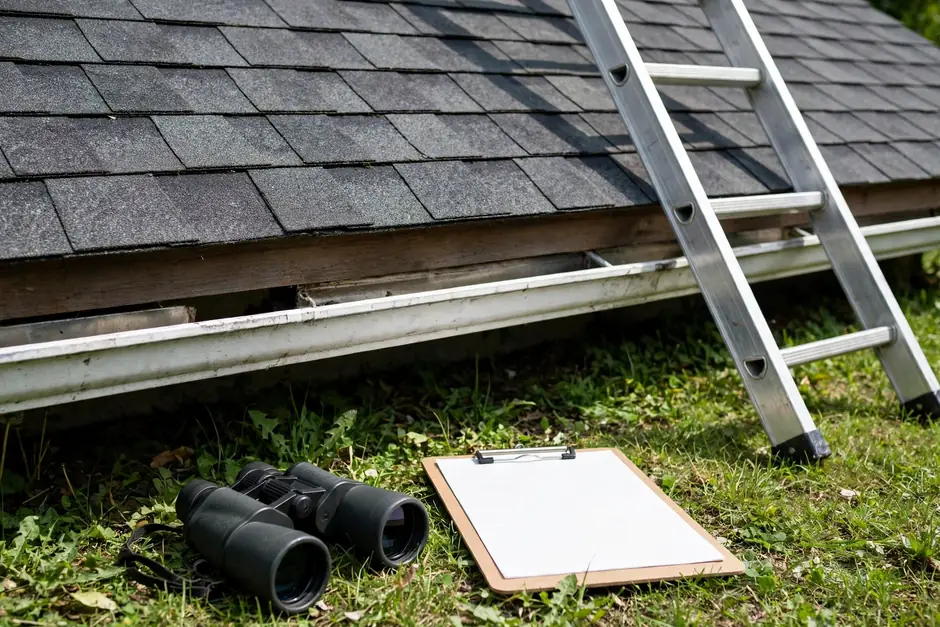
How often should you get a roof inspection in South Bend? No code or rule in the sources for this guide sets a required interval, so the honest answer is general: inspections tend to cluster around three moments, ahead of winter, after storms, and around a purchase or sale, with roof age and condition, recent weather, and visible warning signs affecting the timing.
The short answer: timing depends on roof, weather, and event
Roof inspection frequency in South Bend is a judgment, not a schedule set by law. A roof that has recently weathered hail or high wind, a roof showing interior warning signs, and a roof being assessed before a purchase are all looked at for different reasons, and the timing follows the reason.
A roof inspection page covers three use cases in one place: before a purchase, after a storm, and as part of maintenance. Keeping the three separate matters, because each looks for different things and produces a different kind of record.
Older roofs, roofs with a history of repairs, and roofs under heavy tree cover are looked at more readily than newer, open roofs, but no threshold in this guide turns that judgment into a rule. If something has changed, a stain, missing shingles, granules collecting in gutters, daylight in the attic, the change itself is the prompt.
Why South Bend's climate makes inspections worth planning
South Bend lies in a lake-effect snow belt, downwind of Lake Michigan. For the South Bend station, the 1991-2020 normals run to 64.5 inches of snowfall a year, and recent seasons have ranged from 39.0 inches in 2021 to 91.8 inches in 2022. Snow load and ice, rather than rain alone, shape what an inspection looks for. The winter preparation guide explains the mechanism in full: how to prepare your roof for a South Bend winter.
Hail is also part of the local picture, on secondary reports only. Two dated events anchor it: hail up to 2.5 inches between South Bend and Elkhart, with 1.5 inches at Ironwood and McKinley, on 20 July 2023, and 2.75-inch hail on 15 June 2008. No hail-day count is published here, because the available counts conflict by radius and period and must not be merged.
Wind is the third factor. The adopted code sets a 115 mph design wind speed for St. Joseph County, and dated tornadoes provide the context: an EF2 in Gulivoire Park on 23 June 2019 and an F3 on 24 October 2001. Straight-line wind in summer storms can lift shingle tabs and break seals without removing shingles outright, which is why a post-storm look covers seals and flashing, not just missing pieces. See wind damage roof repair for the storm-damage side.
One more local detail: South Bend has a large stock of homes built between 1920 and 1960, alongside a pre-1920 core and a postwar ring. On older houses, deck condition, prior roof layers, the ice barrier, and ventilation are the plausible themes for an inspection. No neighborhood-level roof survey exists, so this guide claims no roof material or form for any specific neighborhood.
When to Get a Roof Inspected in South Bend Beyond the Annual Check
Beyond routine timing, five situations prompt a roof inspection in South Bend. Each is an event or a decision, not a calendar rule.
1. After a hail event
Hail can bruise shingles, dislodge granules, and dent metal flashing, vents, and gutters without leaving obvious holes. After a hail event, a look from the ground can spot gutter and downspout dents and damaged vents. The roof surface itself needs a closer look, because bruising is felt as much as seen. See signs your roof has hail damage after a South Bend storm for what to look for.
2. After high wind
Wind damage can be subtle. A tab lifts, the seal breaks, and the shingle looks fine from the ground while the seal no longer holds. Missing, creased, or displaced shingles are the visible signs. After high wind, the check covers shingles, ridge caps, and flashing, and the attic is checked for new staining.
3. Before buying a house in South Bend Indiana
A roof inspection before a purchase answers a different question from a maintenance look: what is the condition of the roof, what layers and flashing details are present, and what work is likely needed. The findings belong in writing, so they can be weighed alongside the rest of the purchase decision. Ask what documentation the visit produces before it is booked.
4. When you notice interior warning signs
Water stains on ceiling drywall, bubbling paint, a musty smell in the attic, and daylight through the deck all point to water that has already found a path. Interior signs do not always mean a roof leak, and the source may be flashing, a penetration, or condensation, which is why the inspection covers the attic as well as the surface. See leak detection and repair for how sources are traced.
5. After any roof repair or replacement
After repair or replacement work, a follow-up look confirms the scope was completed as written: flashing details closed, penetrations sealed, debris and nails cleared, and gutters moving water. Keep the written scope and the inspection record together, so later questions have a paper trail.
What Does a Roof Inspection Include in South Bend IN?
A roof inspection visit covers the roof surface, the attic, the flashing, the penetrations, and the drainage. The list below is the general scope. Ask any contractor which of these items a specific visit includes.
- Shingle condition: granule loss, curling, cracking, missing tabs, and worn or displaced ridge caps.
- Flashing: chimney, skylight, step, and valley flashing, for rust, separation, gaps, and old sealant.
- Attic: active leaks, moisture staining, daylight through the deck, insulation condition, and ventilation paths.
- Gutters and downspouts: attachment, slope, and debris load, and whether water moves away from the house.
- Roof penetrations: vents, pipes, and other penetrations, for cracked boots and failed seals.
- Structure: sagging, soft spots, and decking condition visible from the surface and the attic.
Findings should arrive as a written record, with photographs where the contractor provides them. A remaining-life estimate is a judgment, not a measurement, and this guide publishes no lifespan figures for any material. For the material comparison, see metal roofing and shingle roofing.
What affects the cost of a roof inspection
This site publishes no prices, and no South Bend or Indiana inspection price dataset was found for this guide. What can be said generally is that cost follows scope: what the visit covers, how the roof is accessed, and what documentation it produces.
Offers vary between contractors. Ask what any visit covers, whether findings arrive in writing with photographs, and whether attic checks are included, so the scope can be compared on equal terms. A visit that covers only the surface and a visit that covers the surface, attic, and documentation are different services.
Factors that affect what a visit involves:
- Roof size and number of sections
- Pitch and number of stories, which affect access
- Whether attic access and interior checks are included
- Whether documentation for an insurer or a purchase is part of the visit
Compare inspection scope against the decision it supports. A pre-purchase inspection and a storm inspection produce different records, and the roof inspection page sets out the three use cases so the right scope can be requested.
Common mistakes to avoid with roof inspections
The most common mistake is skipping inspections entirely until there is a visible leak. By then, water may have traveled through decking and insulation, and the repair scope is wider than the stain suggests.
The second mistake is treating a surface-only look as a full inspection. Much of what matters, attic moisture, ventilation paths, deck condition, is visible only from inside, and a visit that never enters the attic leaves it unchecked.
The third mistake is accepting verbal findings with no written record. Without photographs and a written scope, later questions about what was found, and what was recommended, have no paper trail.
The fourth mistake is waiting until spring after winter damage. Ice dams form in winter, and the damage happens then. A stain that appears in winter deserves a prompt look, not a spring appointment. The winter guide explains the mechanism: how to prepare your roof for a South Bend winter.
When to Call a Professional
Call a professional when you see water stains on ceilings or walls, granules collecting in gutters, missing or displaced shingles, daylight in the attic, or sagging in the roof line. Each of those signs means the roof is worth a closer look.
If you are not sure whether you need an inspection, call Quality Roofing LLC at (574) 901-6308 during business hours, Mon-Fri 7 AM-7 PM and Sat 8 AM-8 PM, closed Sunday, and describe what you are seeing. Roof maintenance covers the ongoing-care side.
Frequently Asked Questions
How often should I get a roof inspection in South Bend IN?
No code or rule sets a required inspection interval. In general terms, inspections cluster around three moments: ahead of winter, after storms, and around a purchase or sale. Roof age and condition, recent weather, and visible warning signs all affect timing.
What affects the cost of a roof inspection in South Bend Indiana?
Roof size, pitch, number of stories, access, and whether attic checks and written documentation are included. No South Bend or Indiana inspection price dataset was found for this guide, and this site publishes no prices.
What does a roof inspection include in South Bend IN?
A full inspection covers the roof surface, flashing, roof penetrations, gutters and downspouts, attic moisture and ventilation, and visible deck and structure. Findings should arrive as a written record with photographs.
How do I choose someone to inspect my roof in South Bend Indiana?
Ask what the visit covers, whether findings arrive in writing with photographs, and what registration and insurance paperwork the contractor can show. The hiring guide for South Bend homeowners sets out the checks in full.
Can I inspect my own roof instead of hiring a professional?
Obvious problems can be spotted from the ground, but a homeowner look cannot safely cover the full surface, flashing details, or attic conditions. Roof work carries fall risk, and walking a roof can damage it. A professional visit covers the surface and the attic together.
Get Help with Roofing in South Bend
Whether you are planning ahead of winter, following up after a storm, or weighing a purchase, a written inspection record is the starting point. Quality Roofing LLC holds 5.0 stars from 23 Google reviews.
Call Quality Roofing LLC at (574) 901-6308 during business hours to discuss a roof inspection for your South Bend home.