
How to prepare your roof for a South Bend winter
South Bend winters bring lake-effect snow and long cold spells. Preparing a roof for winter in South Bend means understanding ice dams, the ice barrier the adopted code requires, and the attic conditions that cause them.
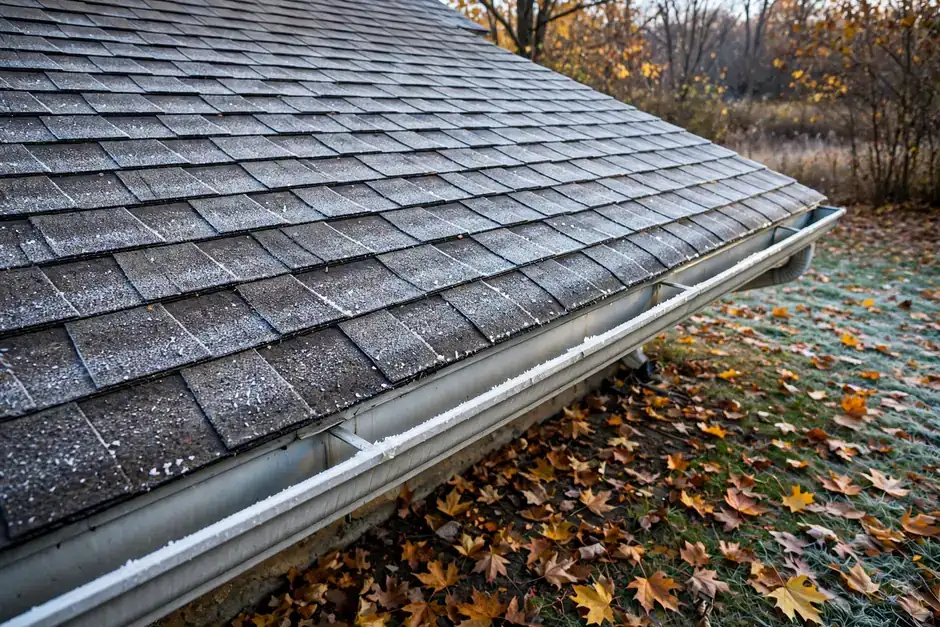
To prepare your roof for a South Bend winter, start with the attic and the eaves: clear gutters and downspouts, look for lifted shingles and worn flashing, and address the ventilation, insulation, and air sealing that control ice dams. The adopted residential code requires an ice barrier on roofs in this area, and that requirement exists because of the snow and cold South Bend sees each winter.
This guide explains the lake-effect snow behind South Bend winters, how ice dams form, what the code requires, and the checks worth doing before winter. It links to the roof inspection page where a professional look fits, and to roof maintenance for ongoing care. Where a number appears, its source is named.
Why South Bend winters are hard on roofs
South Bend sits downwind of Lake Michigan, in the lake-effect snow belt. The National Weather Service describes the mechanism plainly: cold air moving over the relatively warm lake picks up moisture and deposits it as snow downwind, and lake-effect bands can produce 2 to 3 inches per hour with sharp differences over short distances. The 1991-2020 normals for the South Bend station are 64.5 inches of snowfall and 39.23 inches of precipitation a year, but the normal alone understates the variability: recent seasons ranged from 39.0 inches in 2021 to 91.8 inches in 2022, and the record seasonal snowfall is 141.7 inches, in the 1977-78 season.
The adopted code reflects that exposure. Table R301.2(1) in the Indiana Residential Code provisions for St. Joseph County sets a 30 psf ground snow load, a 115 mph wind speed, a 1-degree Fahrenheit winter design temperature, severe weathering, and an ice barrier requirement marked Yes. A roof here is designed for snow load and ice, not just rain.
The housing stock adds to the challenge. South Bend has a pre-1920 core of Victorian, Foursquare, and bungalow houses around downtown and the river, 1910s-1930s revival suburbs, and a large postwar ring of ranches, bi-levels, and split-levels. On an older house, a re-roof may be a second- or third-generation roof, which makes deck condition, the ice barrier, and ventilation the themes to check. No citywide survey of roof age exists, so this guide makes no claim about a typical roof age.
When should you schedule winter roof maintenance in South Bend IN?
Winter roof maintenance in South Bend is arranged ahead of winter, while roofs are clear and conditions allow a full look at shingles, flashing, gutters, and the attic. There is no single correct week. The useful rule is to leave enough lead time that anything found can be addressed before snow cover and sustained cold arrive.
If winter has already arrived, a roof can still be looked at, and problems that are letting water in should not wait for spring. What changes in sustained cold is which methods suit the conditions. Manufacturer guidance for the specific products on the roof governs installation questions, and this guide does not invent temperature limits for sealing or installation.
For how inspection timing fits around storms and home purchases, see how often to get a roof inspection in South Bend. A roof inspection before winter covers the surface, flashing, gutters, and attic in one visit.
The winter roof preparation checklist for South Bend Indiana
The winter roof preparation checklist below follows the order that matters: water moving off the roof, the roof surface and flashing, and the attic conditions behind ice dams. Each item is a check, not a repair prescription.
- Clear gutters and downspouts. Leaves and debris hold water at the eave, where it can freeze and add to ice buildup. Confirm downspouts move water away from the house. See gutter cleaning for what that visit covers.
- Look for lifted, cracked, or missing shingles. Damage that is minor in dry weather can become an entry point once snow sits on the roof. Note where damage is and whether it clusters around valleys, penetrations, or eaves.
- Check flashing at chimneys, skylights, walls, and valleys. Flashing is the metal work that turns water away where the roof meets something else. Gaps, rust, or old sealant at these joints deserve a closer look. See chimney flashing repair for the chimney joint in particular.
- Look in the attic. Signs of past leaks, daylight through the deck, damp insulation, and blocked soffit vents all show up from inside. The attic is also where ventilation and air leakage are assessed.
- Check ventilation paths. Intake at the soffits and exhaust at the ridge work as a pair. Insulation that blocks soffit intake, or vents covered over time, keeps the attic warmer than it should be.
- Trim branches overhanging the roof. Limbs that rest on or hang close over the roof drop debris into gutters and valleys and can damage the surface in wind and ice. Keep the work to what can be done safely from the ground or by a qualified person.
- Check soffit and fascia boards. Soft, stained, or damaged boards at the eave edge signal water that has already been getting in behind the gutter. See soffit and fascia repair for how that joint relates to ventilation.
A roof inspection covers these checks in one visit and produces a record of what was found. Items that involve working on the roof, or opening flashing details, belong to a roofing contractor rather than a ladder and a weekend.
How do you prevent ice dams on a roof in South Bend IN?
Snow melts from below when house heat warms the attic, and the meltwater refreezes at the cold eaves into a ridge that traps later water behind it. Prevention works on that attic warmth through ventilation, insulation, and air sealing together, with heat cables only ever an addition at a single trouble spot. The full prevention guidance, including the step-by-step sequence and the winter signs to watch, is on the ice-dam prevention page.
What causes ice dams in South Bend Indiana?
Ice dams in South Bend are caused by warm attic air melting snow on the upper roof, which then refreezes at the cold eave and traps water behind it. The trigger is usually a combination of air leaks, thin or uneven insulation, and blocked soffit vents, rather than the shingles themselves.
Three patterns recur in general terms: older houses where warm air moves up through wall cavities and unsealed attic floors; houses where a ridge vent exists but soffit intake is buried under insulation; and vaulted or cathedral ceilings where insulation sits against the deck and ventilation space is limited. Each is an attic condition, and each is assessed from inside as well as from the roof.
Long icicles at the eave can accompany an ice dam, but icicles alone do not prove one, and a dam can exist without dramatic icicles. Water staining on ceilings or walls below the eave, after snow has sat on the roof, is the sign that water has already found a path inside.
Common mistakes to avoid when preparing for winter
The most common winter preparation mistake is leaving checks until snow cover makes a full look difficult. Prevention work is attic work and surface work, and both are easier to assess before sustained cold.
Other mistakes that recur:
- Using a steel shovel or sharp tool on the roof. Aggressive scraping damages shingles, and working on a snow-covered roof carries fall risk. This guide does not present snow work on the roof as a homeowner task.
- Sealing flashing with surface sealant alone. Sealant over a failed flashing joint is a temporary measure. Proper metal flashing, correctly lapped and counter-flashed, is the durable detail. Surface products do not substitute for it.
- Ignoring a small ceiling stain. A stain that appears in winter may mark water that has already traveled through decking and insulation. It deserves a prompt look, not a coat of paint.
- Assuming gutter guards end gutter care. Guards reduce debris entry, but granules and fine debris still collect. Guarded gutters still need checking. No guard removes the need to confirm water moves.
- Treating the roof surface as the whole problem. Ice dams, recurring leaks at eaves, and uneven snow melt usually trace to attic conditions. Surface work without an attic look leaves the cause in place.
Where gutters need more than cleaning, gutter repair covers re-pitching, re-sealing, and re-hanging. Where the issue is the roof surface or flashing, a roof inspection is the next step before winter work is planned.
When to call a professional
Call a roofing contractor when water is coming inside, when shingles are missing or flashing is visibly displaced after wind, when the attic shows active leaking or daylight through the deck, or when ice buildup at the eave is accompanied by interior staining. Those are signs that the roof needs more than monitoring.
Quality Roofing LLC is a roofing contractor at 63251 Mulberry Rd, South Bend, IN 46614. Calls are answered during business hours: Mon-Fri 7 AM-7 PM and Sat 8 AM-8 PM, closed Sunday. The business holds 5.0 stars from 23 Google reviews.
If the roof is older and the question is whether repair or replacement fits, the decision guide how to tell if your roof needs repair or full replacement sets out the considerations, and roof replacement explains the permit and code side of a re-roof.
Frequently Asked Questions
How do I prepare my roof for winter in South Bend IN?
Clear gutters and downspouts, check shingles and flashing, and address attic air sealing, insulation, and ventilation, which control ice dams. The adopted code requires an ice barrier on roofs in this area. Arrange checks ahead of winter so anything found can be addressed before snow cover.
What causes ice dams in South Bend Indiana?
Warm air reaching the roof deck melts snow on the upper roof. The meltwater refreezes at the colder eave and holds later water back under the shingles. Air leaks, thin or uneven insulation, and blocked ventilation are the usual contributors.
When should I schedule winter roof maintenance in South Bend IN?
Ahead of winter, while the roof is clear and a full look is possible. No single correct week applies. If winter has arrived, problems that let water in should still be looked at promptly. Manufacturer guidance for the specific products on the roof governs installation questions.
What affects the cost of winter roof preparation in South Bend Indiana?
Scope is the main driver: whether the work is an inspection, gutter care, flashing or shingle repair, or attic air sealing and insulation, plus roof size, pitch, and access. This site publishes no prices. A written scope for the specific roof is the way to compare.
Can clearing snow from the roof replace winter preparation?
No. Removing snow manages what is on the roof after the fact. It does not correct the attic conditions that form ice dams or repair worn flashing. Gutter care, a sound surface, and attic air sealing, insulation, and ventilation are the preventive steps.
Get help with Roofing in South Bend
If you would rather hand the checklist to someone who does this every day, call Quality Roofing LLC at (574) 901-6308 during business hours to discuss a roof inspection and winter checks for your South Bend roof.